 Menu
Menu
Testing Service Corporation
Service Is Our Middle Name
Menu
Menu
Testing Service Corporation
Service Is Our Middle Name
CCDD stands for Clean Construction Demolition Debris which occurs when uncontaminated soil mixes with broken concrete without protruding metal bars, bricks, rock, stone, or reclaimed asphalt pavement. When this happens the soil is considered CCDD. For a more detailed description of what constitutes CCDD please visit the Illinois EPA CCDD Site
CCDD and its respective regulations are an Illinois specific program.
Soil that falls under this classification can be disposed of at specific CCDD/USFO Sites as long as it is able to prove that it meets MAC (Maximum Allowable Concentrations) table requirements.
However, even if it meets the MAC requirements, that doesn't guarantee that the landfill will accept your soil disposal. Individual landfill operators may have additional requirements or levels for these contaminants. We have the industry knowledge to be able to tell you the specific requirements of a particular landfill, which greatly improves your chances of disposal acceptance.
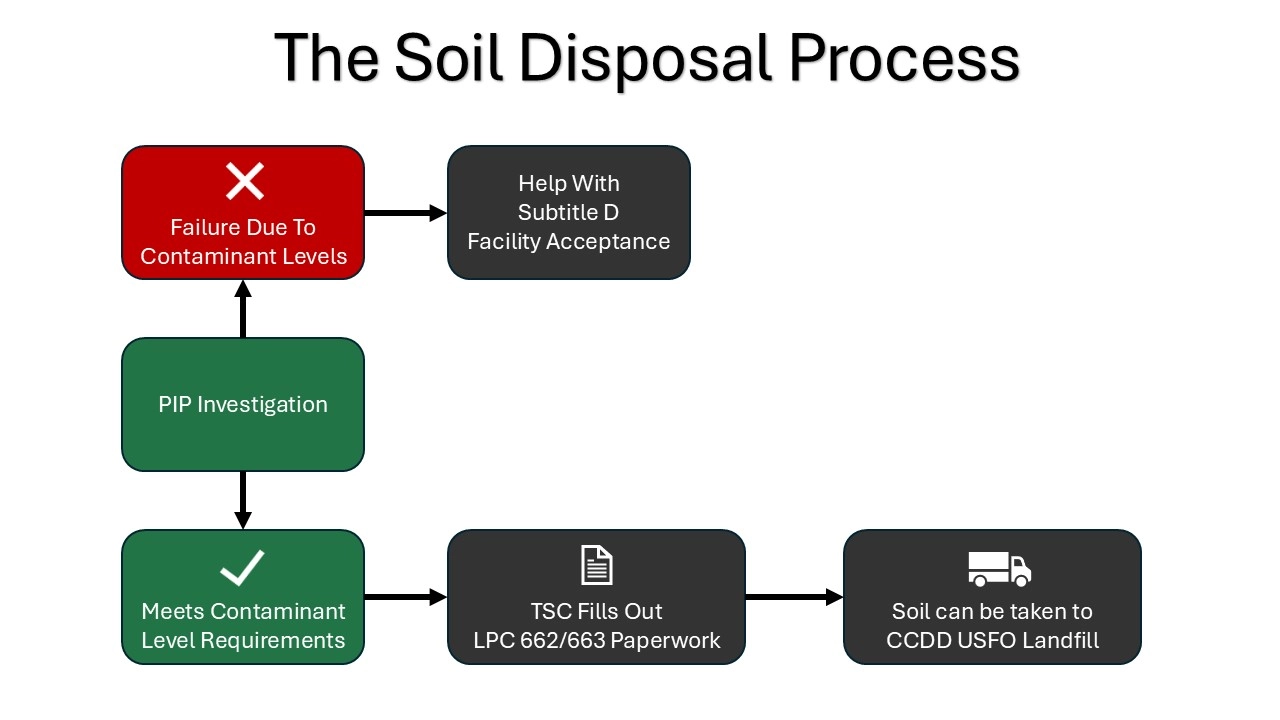 In order to properly and legally dispose of your CCDD soil there is a process that must be completed. The first step of this process is the PIP investigation.
The PIP Report
In order to determine the condition of your site and sign off on the soil, we must conduct a PIP (Potentially Impacted Property) investigation.
This includes a number of different action items: historical research, state and federal database searches, a site visit, and subsequent sampling and analysis.
Historical Research
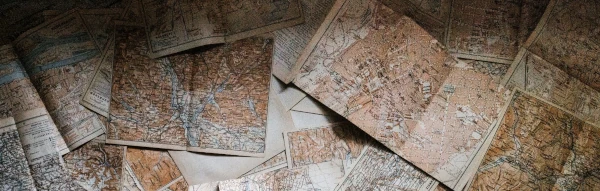 Environmental professionals at TSC will comb through historical aerials, reports, and any other historical documents in order to see if there
are any parts of the site that should become part of the sampling program later on. If we learn the site was located next to a railroad, for example, that
would indicate that we should test for certain contaminants. If it had been located close to an industrial plant, that would lend itself to a
seperate set of tests.
Environmental professionals at TSC will comb through historical aerials, reports, and any other historical documents in order to see if there
are any parts of the site that should become part of the sampling program later on. If we learn the site was located next to a railroad, for example, that
would indicate that we should test for certain contaminants. If it had been located close to an industrial plant, that would lend itself to a
seperate set of tests.
State and Federal Databases
Continuing on with the research phase, we'll look through State and Federal databases to see if there is any intel available for the
property. This can save us time and headaches by being able to identify things that have already been documented about the site such
as underground storage tanks. All of this research will be included in the final report, so you are able to see the logic of why we
are testing what we are testing.
Site Visit and Sampling
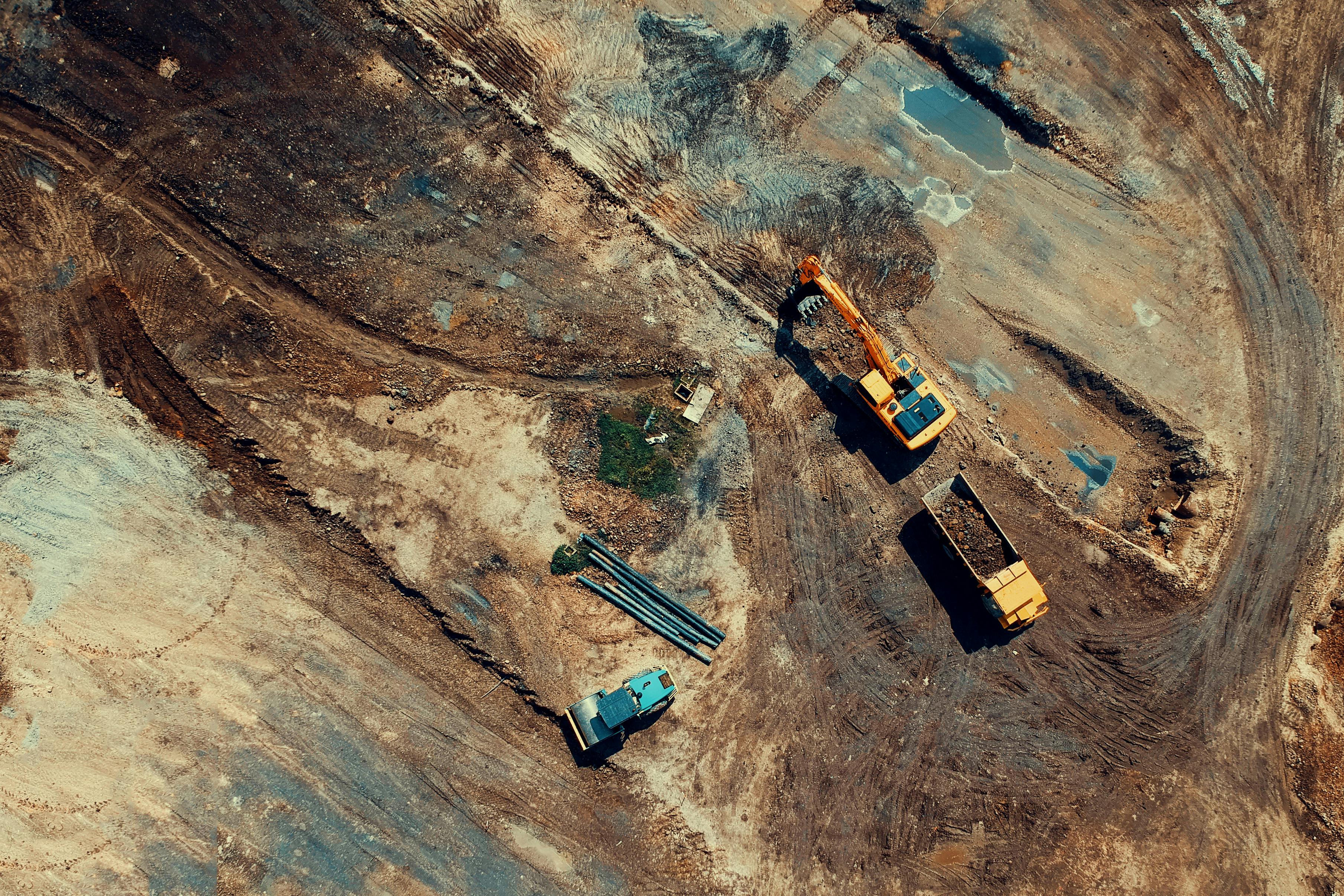 A site visit is then conducted as part of the investigation in order to get further clarification on things we found from our earlier research
or to spot other areas that may be of interest for sampling. The point is that we are thouroughly looking through every possible avenue to get
you accurate results. There is the research component, but this "boots on the ground" approach is equally important to getting proper results.
A site visit is then conducted as part of the investigation in order to get further clarification on things we found from our earlier research
or to spot other areas that may be of interest for sampling. The point is that we are thouroughly looking through every possible avenue to get
you accurate results. There is the research component, but this "boots on the ground" approach is equally important to getting proper results.
If we are taking samples at the same time, then we may do that now too. Otherwise, TSC has the distinct advantage of having their own drill rig fleet on staff for environmental and geotechnical samples.
Often times we will combine geotechnical engineering work with our environmental work as it can save both time and money for our clients as well as improving the accuracy of the samples since we are able to go much deeper then by traditional hand auger. Doing so can give us a sample that is much more representative of the site.
PID Screening and Lab Analysis
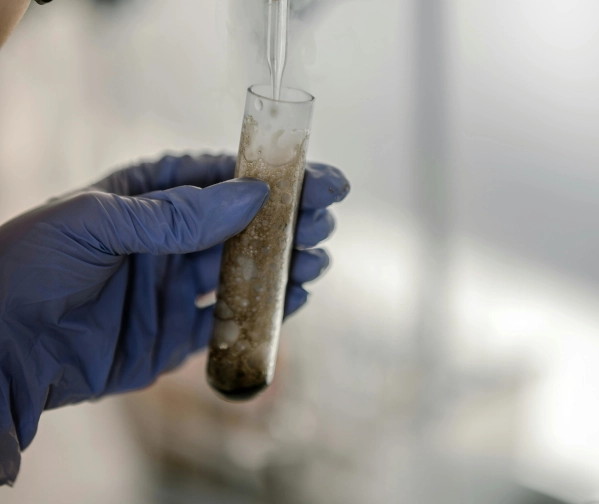 After samples have been collected, Environmental Professionals will use PID screening to determine if VOC(s) are present
in high enough concentrations to be a concern. This is a way that TSC differentiates itself from our competitors.
After samples have been collected, Environmental Professionals will use PID screening to determine if VOC(s) are present
in high enough concentrations to be a concern. This is a way that TSC differentiates itself from our competitors.
This preemptive check is very important as many of the landfill operators will use a PID device to screen soil as it is coming into the landfill. If it fails this test at the entrance to the landfill then the soil would be rejected irregardless of a clean PIP report.
Once samples have been screened using the PID, we use a third party lab for soil sample analysis. Using a lab separate from ourselves further lends itself to our report's accuracy as they don't have a vested interest in the results. Usual turnaround time for the lab portion is about a week as they have to run through quite a few tests.
Reporting
Once we get lab results we are generally able to get a report out quickly to you that details the historical and database research from earlier,
the site visit, and finally the sampling results. Based on the results of the soil samples we are either able to tell you that the site passed or failed
based on the contaminant standards.
If your site passes...
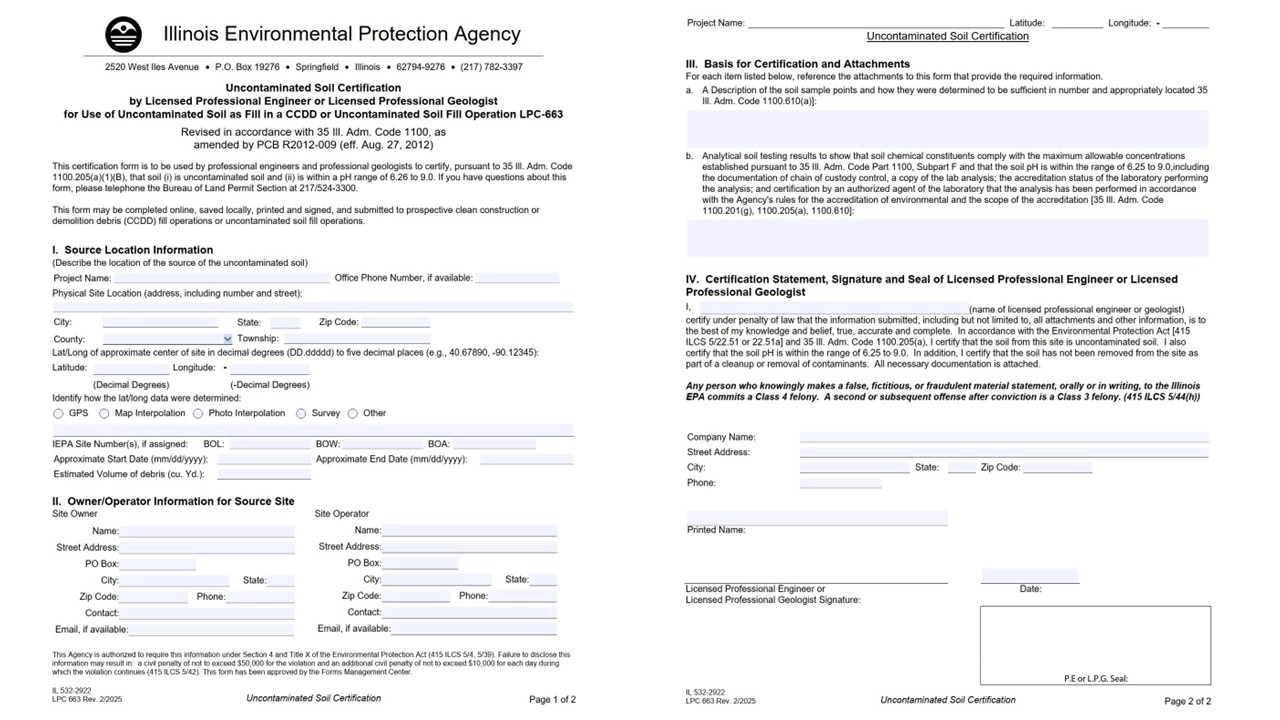
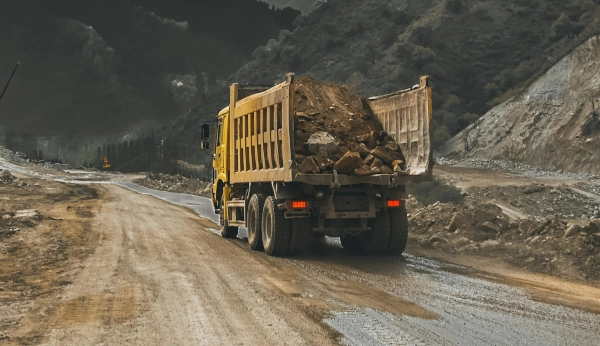 If your site passes then we will indicate that in the report and we will fill out the respective LPC 662/663 paperwork.
A registered Geologist from our office will sign off on the CCDD soil certifying it for disposal. You'll then be able to take it to CCDD/USFO landfill
site for soil disposal. This full document with the 662/663 form and the PIP report is needed for acceptance. Failure to have
the PIP report almost guarantees rejection at the landfill.
If your site passes then we will indicate that in the report and we will fill out the respective LPC 662/663 paperwork.
A registered Geologist from our office will sign off on the CCDD soil certifying it for disposal. You'll then be able to take it to CCDD/USFO landfill
site for soil disposal. This full document with the 662/663 form and the PIP report is needed for acceptance. Failure to have
the PIP report almost guarantees rejection at the landfill.
If your site fails...
If your site fails TSC will outline the avenues that can be taken from here and we can help with getting your soil into a
Subtitle D facility. Alternatively we may be able to sample more areas to zero in on the problem spot potentially isolating it from other areas
that may contain uncontaminated soil.